
Vertical Mixer / Blender

Vertical Mixer / Blender
(YBVM)
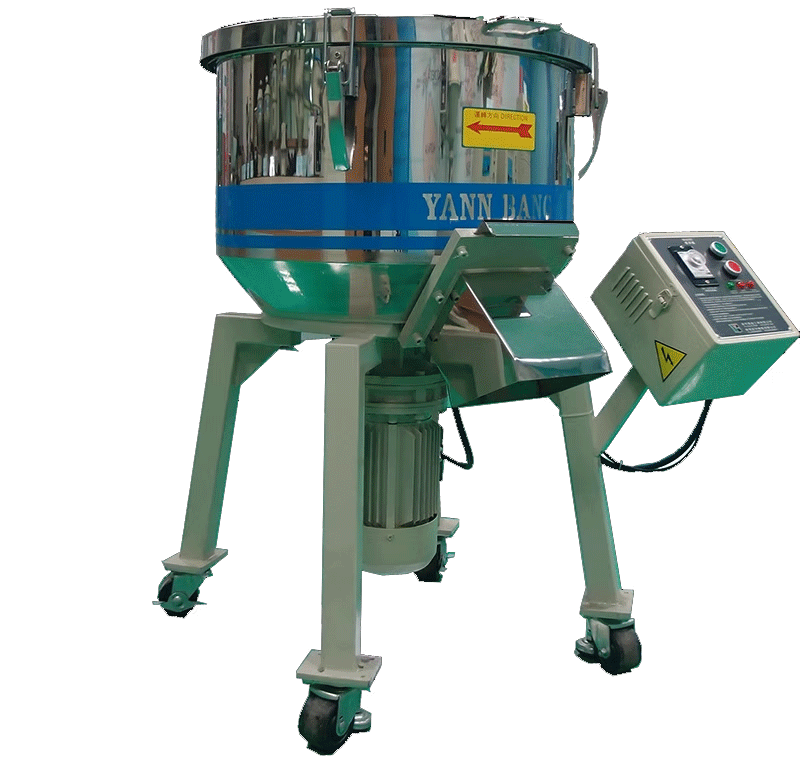
Vertical Blender is mainly for mixing plastic materials. It's also with motor overload protector and power safety device to make the operation safe and easy.
FEATURES
-
Applied with vertical gear speed reducer and multi blades of helical angles, the inner surface is stainless made, no pollution and durable.
-
Mix well and rapidly.
-
With motor overload protector and power safety device, operation is safe and easy.
SPECIFICATION

REMARKS
-
We reserve the right to change specifications without prior notice.


STANDARD ACCESSORIES
-
Motor overload protector
-
Power Safety Device
FAQ
Reason:
-
Worn blades.
-
Excessive blade clearance.
-
Incorrect blade rotation direction.
-
Excessive rotation speed.
-
Change in material properties.
Ans.:
-
Resharpen the blades.
-
Adjust blade gap to an appropriate distance.
-
Correct the rotation direction.
-
Replace the pulley to reduce rotation speed.
-
Adjust granulating parameters according to different materials.
-
Reason:
-
High feed material temperature.
-
Overfilled storage bin causing discharge blockage.
-
Damaged bearings.
Ans.:
-
Allow material to cool down before feeding.
-
Clear the accumulated material from the storage bin.
-
Replace the bearings.
-
Reason:
-
Worn screen mesh.
-
Loose screen frame.
-
Screen mesh size too large.
Ans.:
-
Replace the screen.
-
Tighten the screen frame.
-
Replace with a smaller screen mesh.
-
Reason:
-
Variations in material specific gravity.
-
Worn blades.
-
Screen mesh size too small.
-
Inappropriate machine model selection.
Ans.:
-
Account for different specific gravities of materials.
-
Resharpen the blades.
-
Replace with a suitable screen mesh.
-
Switch to a suitable machine model.
-
Reason:
-
Worn blades.
-
Friction between rotating and stationary blades.
-
Loose blades.
-
Foreign objects fallen into the granulating chamber.
-
Insufficient voltage or phase loss.
-
Damaged bearings.
Ans.:
-
Resharpen the blades.
-
Adjust blade gap to an appropriate distance.
-
Tighten the blades.
-
Remove foreign objects and clear contaminated Regrind.
-
Check power supply.
-
Replace the bearings.
-
Reason:
-
Oversized feed material.
-
Loose machine components.
-
Uneven ground surface, wheels not fully grounded.
Ans.:
-
Select appropriate feed material size.
-
Inspect and locate the source of the noise/vibration.
-
Ensure all four casters/wheels are evenly contacting the ground.
-
Reason:
-
Power supply interruption.
-
Overloading due to improper operation, triggering overload protection.
-
Hopper not properly locked/latched.
-
Damaged magnetic contactor.
Ans.:
-
Check power supply.
-
Clear the granulating chamber, reset the protection trip, and restart.
-
Check safety interlock switch engagement.
-
Replace the magnetic contactor.
-