
Low-Speed Silence Crusher

Low-Speed Silence Crusher (YBCSS)
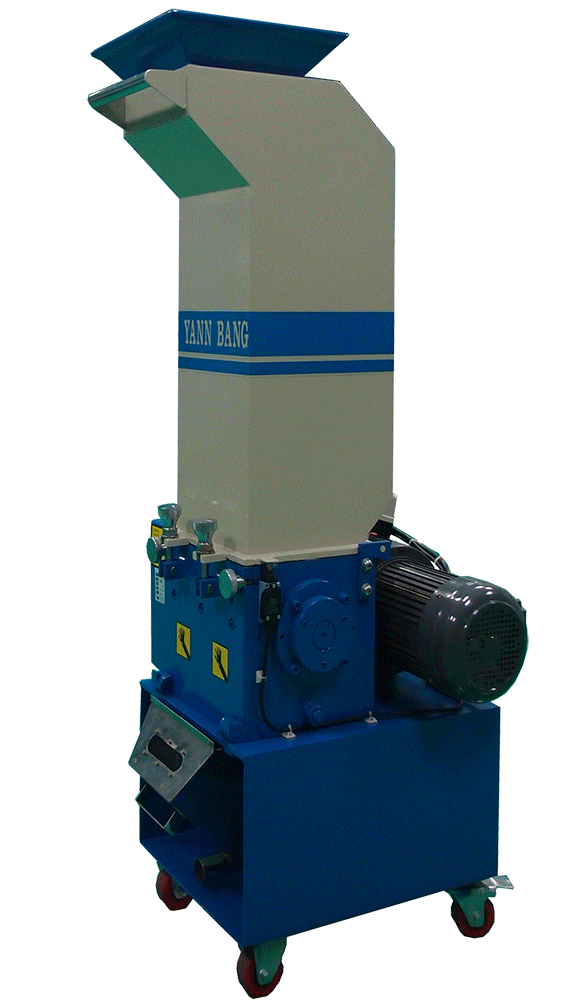
Silent & low speed crusher can break recycled material evenly and quietly with less dust. Easy to clean and operate with multi safety device.
FEATURES
-
This series are suitable to granulate a small amount of sprues, waste material or defective products located next to your molding machine.
-
With low-speed and silence design, it can break evenly and quietly with less dust. Easy to clean and operate with multi safety device.
-
With patented(CHINA PAT. ZL200820119883.8) design, once the crusher required for maintenance or repair, the crusher will completely stop as the safety device is on and it is very safe for the operator to open the crusher to clean, check or maintain.
SPECIFICATION

REMARKS
-
The material of blades is SKD-11.
-
We reserve the right to change specifications without prior notice.


STANDARD ACCESSORIES

01
Teeth Cutter SKD-11
OPTION

01
Instant Recycling Feeder
-
Sent the recycled material instantly to the discharge bin by compressed air.
-
Unique design avoids pollution for good quality.
-
The filter can keep your working place clean.
-
The discharge outlet with multiple designs is great for your different uses.
-
The feeder and base can adjust the output of raw resin or recycling material.
02
Instant Recycling Feeder
-
To speed up the air inside pipe by 4-6kgf/cm² compressed air conveys the recycled material to the discharge bin.

FAQ
Reason:
-
Worn blades.
-
Excessive blade clearance.
-
Incorrect blade rotation direction.
-
Excessive rotation speed.
-
Change in material properties.
Ans.:
-
Resharpen the blades.
-
Adjust blade gap to an appropriate distance.
-
Correct the rotation direction.
-
Replace the pulley to reduce rotation speed.
-
Adjust granulating parameters according to different materials.
-
Reason:
-
High feed material temperature.
-
Overfilled storage bin causing discharge blockage.
-
Damaged bearings.
Ans.:
-
Allow material to cool down before feeding.
-
Clear the accumulated material from the storage bin.
-
Replace the bearings.
-
Reason:
-
Worn screen mesh.
-
Loose screen frame.
-
Screen mesh size too large.
Ans.:
-
Replace the screen.
-
Tighten the screen frame.
-
Replace with a smaller screen mesh.
-
Reason:
-
Variations in material specific gravity.
-
Worn blades.
-
Screen mesh size too small.
-
Inappropriate machine model selection.
Ans.:
-
Account for different specific gravities of materials.
-
Resharpen the blades.
-
Replace with a suitable screen mesh.
-
Switch to a suitable machine model.
-
Reason:
-
Worn blades.
-
Friction between rotating and stationary blades.
-
Loose blades.
-
Foreign objects fallen into the granulating chamber.
-
Insufficient voltage or phase loss.
-
Damaged bearings.
Ans.:
-
Resharpen the blades.
-
Adjust blade gap to an appropriate distance.
-
Tighten the blades.
-
Remove foreign objects and clear contaminated Regrind.
-
Check power supply.
-
Replace the bearings.
-
Reason:
-
Oversized feed material.
-
Loose machine components.
-
Uneven ground surface, wheels not fully grounded.
Ans.:
-
Select appropriate feed material size.
-
Inspect and locate the source of the noise/vibration.
-
Ensure all four casters/wheels are evenly contacting the ground.
-
Reason:
-
Power supply interruption.
-
Overloading due to improper operation, triggering overload protection.
-
Hopper not properly locked/latched.
-
Damaged magnetic contactor.
Ans.:
-
Check power supply.
-
Clear the granulating chamber, reset the protection trip, and restart.
-
Check safety interlock switch engagement.
-
Replace the magnetic contactor.
-